
Most VR training doesn’t fail at the start. It fails in what happens next.
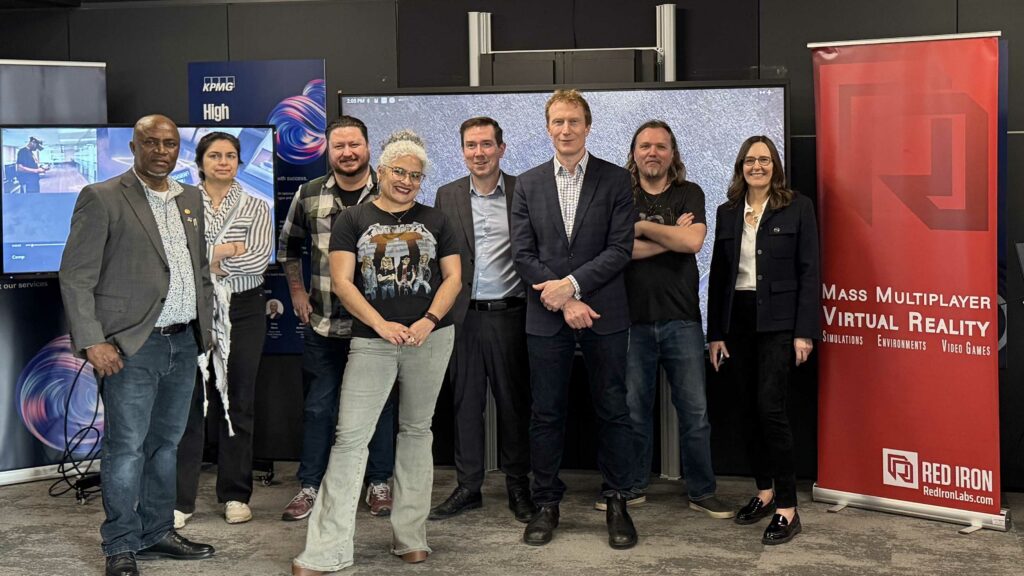
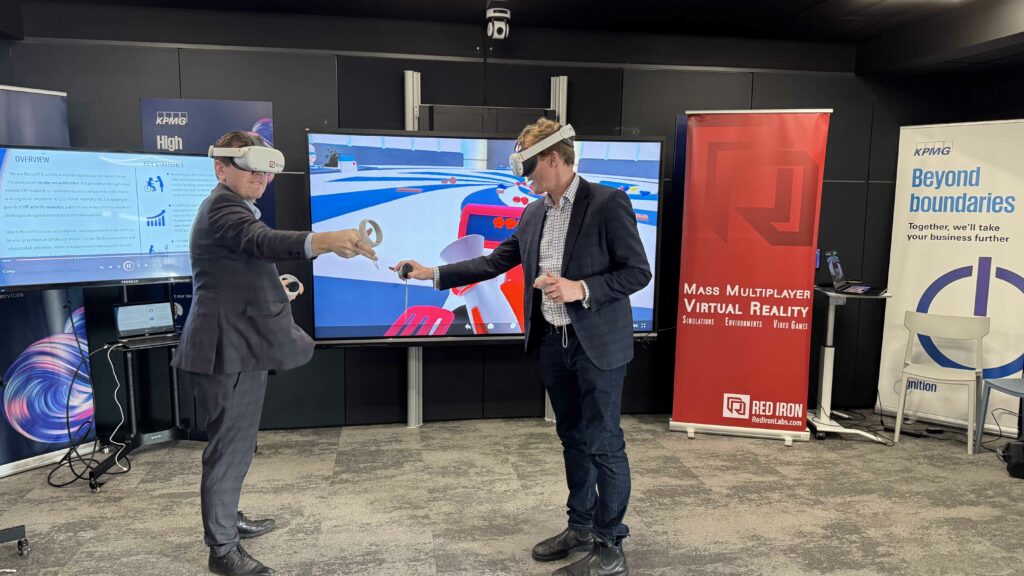
Last week, we demonstrated our work in virtual reality to Canada’s Minister of Canadian Identity and Culture, Marc Miller, and MP Corey Hogan at Platform Calgary. What stood out wasn’t the technology. It was where VR training actually works in real environments.
Because the real challenge isn’t getting someone to try something.
It’s getting them to keep going.
How VR training is being used today
These environments are using VR where people need to act, not just watch:
- Workforce training → safety, onboarding, skill development
- Simulation → hands-on practice without real-world risk
- Education → learning through interaction
The appeal is simple. Using virtual reality for training lets people learn by doing.
But starting isn’t the problem. Continuing is.
Why many VR training programs fail
A pattern shows up across most training programs— people start, but don’t follow through.
- Trainees try the experience once but don’t complete it
- Participation drops before skills are retained
- Engagement fades after the first interaction
This usually isn’t a content problem. It’s a design problem.
What makes VR training actually work
People keep going when the next step is clear.
That’s where game design plays a role.
Not because games are “fun,”
but because they guide action:
- You know what to do next
- You see what happened
- You can try again
In VR training, this changes what people do—not just what they see.
Real examples of using VR in practice
When we demonstrated our work, we showed two different applications:
Muffin Fight (Group Training / Team Environments)
A multiplayer VR experience designed to get people actively involved from the start—and keep them participating over time.
Used in group settings, it encourages collaboration and keeps people involved, rather than dropping off after the first interaction.
NeuroRecoVR (Healthcare Application)
A VR-based stroke rehabilitation platform used in clinical settings.
While not a traditional training tool, it shows the same pattern— people engage in structured activities that support consistency and follow-through over time.
Different use cases. Same pattern. People continue when the experience supports it.
This is the kind of work we do— designing VR experiences people actually follow through on, so time and budget invested in training don’t go to waste.
Where VR training is most effective
The appeal is simple: people learn by doing. This works best in environments where follow-through matters:
- Safety training → consistency and repetition
- Workforce development → completion, not just exposure
- Skill-building → active participation over passive learning
The real question isn’t “Did they try it?” It’s:
Did they keep going without being pushed?
Final thoughts
VR on its own isn’t the solution.
When the experience is designed well, it becomes a tool for shaping behavior, not just delivering content.
If you’re already investing in training, this is where the difference shows up: whether people follow through or drop off.
That’s where VR training actually works.
If you’re exploring VR training and want to understand where it will work (and where it won’t), we can discuss how this could apply in your environment. Contact us.